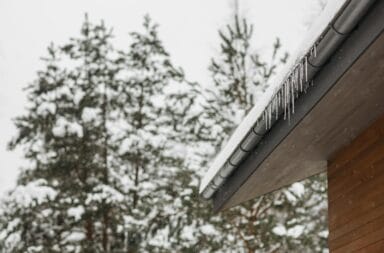
Gutter guards are protective covers or inserts that sit on top of, or inside, your gutters to keep out leaves, twigs, pine needles, and other debris while still letting rainwater flow through. In simple terms, gutter guards act like a filter for your gutter system so it does not clog as easily. When gutter guards work properly, water flows along the roof edge, into the troughs, and down the downspouts instead of spilling over the sides.
Most gutter guards are made from metal, plastic, or foam and are designed to reduce how often someone needs regular gutter cleaning, help prevent clogged gutters and water overflow near the home’s foundation, and cut down on problems like ice dams and pest nests. Different types of gutter guards work in different ways. Some use screens or mesh, some use gutter cover panels that rely on surface tension, and others use foam and brush guards that fill the inside of the gutter channel.
For a typical home, a properly chosen and installed gutter guard system can make the gutter system work more smoothly, protect siding and fascia from water damage, and save money on home maintenance over time. Even the tiniest debris is less likely to build up and cause issues, although no system makes gutters completely maintenance free.
Introduction to Gutter Guards
A lot of homeowners first hear the term “gutter guards” after a nasty clog, stained siding, or a flooded basement. They start searching what are gutter guards and suddenly see ads, bold promises, and a lot of technical language about gutter guard types and gutter protection systems.
At the core, it is actually simple. Gutter guards are add-on products that work with existing gutters to keep debris out while allowing water to flow freely into the downspouts. They sit either:
- On top of the gutter as a cover, screen, or mesh, or
- Inside the gutter as foam guards, brush gutter guards, or other inserts.
The idea is to stop larger debris like leaves, seed pods, and roof grit, as well as smaller debris such as pine needles and other debris, from blocking the downspouts and preventing clogs. In practice, gutter guards play a quiet but important role in preventing clogs, reducing debris accumulation, and keeping debris away from the areas where it can cause problems.
Most people do not want to become experts on the different types of gutter guards. They just want to know if gutter guards work well enough to keep them off the ladder and protect their home’s foundation and exterior finishes. The sections below walk through the main gutter guard types, how they function, and how to choose the right gutter guard for a specific home and climate.
One thing to remember right away: gutter guards help a lot, but they do not replace good gutters, proper slope, and downspouts that send water away from the home’s foundation. They are one part of a larger gutter system, not a magic fix for every water problem.
Benefits of Gutter Guards
Most people are drawn to gutter protection for one big reason: they are tired of climbing ladders to scoop out slimy muck. But the benefits of the different types of gutter guards go far beyond fewer trips up a ladder.
Reduced gutter cleaning
Gutter guards dramatically cut how often gutters need gutter cleaning. Do they eliminate frequent cleaning forever? No. But instead of cleaning every season, many homes shift to occasional checks and light touch-ups.
Less cleaning means:
- Lower risk of ladder accidents during a DIY project.
- Fewer calls to cleaning companies and lower maintenance costs.
- Less wear and tear on the gutter material from constant scraping.
For older homeowners or anyone with mobility issues, simply not needing to climb a tall, wobbly ladder in heavy rain or gusty wind is a major benefit.
Better water flow and less overflow
When gutters are clogged, water spills over the sides instead of going down the downspouts. That water overflow can:
- Soak the soil right next to the home’s foundation.
- Stain siding and fascia boards.
- Erode flower beds and landscaping.
By keeping large debris and smaller debris out, gutter guards help water flows where it belongs, inside the gutter system and then out through the downspouts. In other words, gutter guards work to keep the intended path clear so rainwater flows steadily instead of splashing down the walls.
Protection for the home’s foundation and exterior
Clogged gutters do not just look bad. Over time, water constantly dumping near the base of the house can seep into basements or crawl spaces. In colder climates, that water can freeze and thaw, which may stress concrete and masonry. The result is an increased risk of water damage both outside and inside the structure.
With proper installation, gutter guards help by keeping water away from the foundation, reducing basement dampness and musty odors, and lowering the chance of frost-related cracks. They also help protect the fascia and soffits from water soaking in when clogs form.
Fewer pests and nesting spots
Open, clogged gutters are a convenient place for pests to live:
- Mosquitos breed in standing water in clogged gutters.
- Birds and squirrels build nests in pockets of wet leaves.
- Rodents climb overhanging trees and use gutter runs as a highway.
By keeping debris and standing water to a minimum, gutter guards make those areas far less inviting. A determined squirrel may still explore, but there are fewer sheltered corners with accumulated debris.
Less ice buildup and roof edge damage
In snowy or icy regions, blocked channels can contribute to ice dams and heavy icicles along the eaves. While ice dams are mostly caused by heat loss through the upper structure, clogged gutters can trap meltwater and worsen the issue.
Gutter guards that keep the channels clearer can lessen ice weight in the system and reduce the chance of sections pulling away from the fascia. They support the overall goal of keeping debris out so meltwater can move away instead of backing up and freezing.
Longer gutter lifespan
Water, wet leaves, and dirt sitting in gutters for months at a time act like slow-motion rot, especially on older or lower-quality materials. Over years, this leads to rust on steel, seam leaks, and sagging runs.
Because gutter guards reduce debris accumulation and constant moisture, the system itself often lasts longer, with fewer leaks and structural issues. Over the life of the home, that can save money compared with repeated repairs and premature replacements.
Types of Gutter Guards
Not all gutter guard types look or work the same. There is no single best choice for every property, which is why homeowners can feel overwhelmed when comparing different types of gutter guards online. The main categories below describe how the most common systems handle water and debris.
Mesh gutter guards
Mesh gutter guards use a sheet of metal or plastic with small holes that cover the top of the trough. Water flows through the holes while leaves and larger debris stay on top.
There are two familiar varieties of mesh gutter guards:
- Standard mesh, with slightly larger openings.
- Micro mesh gutter guards, with very tiny openings.
Standard mesh gutter guards are popular because they strike a balance between blocking debris and allowing rainwater to move efficiently. They handle large debris, smaller debris such as seed pods, and roof grit reasonably well, depending on the mesh size.
Screen gutter guards
Screen gutter guards are similar to mesh but usually have larger openings and a simple, lightweight design. A screen panel snaps or screws onto the top of the gutter run.
Screen gutter guards work well for large debris such as broad leaves and twigs, but fine debris like pine needles and shingle grit may still slip through. In areas with big maple or oak trees, screens are sometimes a reasonable middle-ground when paired with periodic checks.
Foam gutter guards and brush gutter guards
Foam gutter guards are inserts made from porous material that fit snugly inside the trough. Water passes through the foam while leaves and other debris sit on top and usually dry out and blow away. Foam gutter guards are popular as a DIY project because of their easy installation.
Brush gutter guards use bristle-filled inserts that sit inside the trough. Leaves settle on top, while water moves between the bristles. Brush guards and foam guards are often grouped together as foam and brush guards because they share similar advantages and limitations.
Homeowners tend to like these options because they are simple to cut and fit, and they do not change the appearance of the edge from the ground. However, foam and brush guards can hold moisture, encourage moss and algae, and may need more frequent cleaning or replacement than metal systems.
Micro mesh gutter guards
Micro mesh gutter guards are the “extra fine” version of mesh systems. Their tiny openings are small enough to block fine debris including pine needles, roof grit, and many types of seeds, while still allowing water to flow.
These guards are usually made from stainless steel or another durable metal and are often installed with a slight slope so debris can slide or blow off. For homes with dense trees that drop lots of small material, micro mesh gutter guards are often the most effective long-term choice.
Gutter cover and reverse curve gutter guards
Gutter cover systems, sometimes called surface tension gutter guards or helmet-style guards, use solid or mostly solid panels that arch over the trough. These curve guards rely on surface tension: water clings to the curved panel, wraps around the lip, and drops into a narrow slot while debris slides off the outer edge.
Many reverse curve gutter guards are designed to handle heavy rain, but performance depends heavily on the specific profile and the way the panels are fitted. Proper installation is critical so the cover lines up with the roof edge and the slot can carry water without overshooting. In marketing materials, these systems are often presented as very low-maintenance options that blend with the trim.
Choosing the Right Gutter Guard
Choosing between the many types of gutter guards is less about the fanciest brochure and more about matching the product to the home, local climate, and maintenance preferences. Different types of gutter protection excel in different conditions.
Consider the trees around the home
The type of debris falling on and around the home is a major factor in selecting gutter guard types:
- Large leaves from oaks or maples: screens or mesh gutter guards are often enough.
- Pine needles and tiny leaves: micro mesh gutter guards or well-designed cover systems perform better.
- Lots of seeds, blossoms, or roof grit: finer mesh and reverse curve guards may keep more material out.
If the property has mixed trees, such as big oaks in front and evergreens in back, it might even make sense to use different types of gutter guards on different runs, as long as the overall look and function remain consistent.
Look at the roof and gutter design
The pitch of the structure, the size of the troughs, and the condition of the existing gutters all matter. Steep upper sections shed water quickly, so a guard with strong capacity for heavy rainfall is important. Undersized troughs or poor slopes may need attention before installing any guard system.
Specialty materials or complex rooflines can also affect gutter guard installation. In those cases, many homeowners rely on professional installation so everything is anchored correctly without voiding warranties.
Budget and long-term value
Everyone has a budget, even if they do not state it up front. Lower-cost options like basic screens, foam gutter guards, or brush guards have a smaller upfront price but may need more frequent cleaning or replacement. Premium systems such as micro mesh gutter guards or reverse curve gutter guards cost more initially but often last longer and require less attention.
When comparing options, it is helpful to look at:
- Cost per linear feet of material and installation.
- Expected lifespan of the product.
- Potential savings from reduced gutter maintenance and fewer emergency repairs from water damage.
DIY vs professional installation
Some systems are clearly designed for DIY project use on single-story homes. Foam gutter guards, brush gutter guards, and basic screens often advertise easy installation and can be cut on site with common tools.
Other systems, particularly micro mesh and reverse curve guards, tend to work best with professional installation. Contractors familiar with proper installation techniques can fine-tune slopes, seal seams, and ensure that water to flow into the downspouts rather than over the edges during heavy rain.
For tall homes, steep grades, or complex layouts, most people are better off hiring a pro to install gutter guards. The safety risk and the importance of getting angles correct often outweigh any immediate savings from doing it alone.
Gutter Guard Installation and Maintenance
Even the best products will not perform if the gutter guard installation is rushed or incomplete. A solid mid-range system fitted correctly often outperforms a premium system installed poorly.
Basic steps of installation
While each manufacturer has its own instructions, most installation projects follow a similar pattern:
- Full cleaning. All leaves, mud, and old debris are removed so the channels start clean.
- Check for damage. Loose spikes, sagging sections, leaks, and rotten fascia are repaired.
- Measure and cut. Panels or inserts are cut to fit each run and around corners or downspouts.
- Attach guards. Depending on the design, pieces snap on, screw into the lip, anchor to the fascia, or sit inside the trough.
- Test with water. The installer runs water to confirm that water flows into the trough instead of overshooting.
Throughout this process, attention to detail is key. A well-planned project respects the condition of the existing gutters and makes sure new components sit firmly without bending or gaps.
Maintenance after installation
Gutter guards reduce gutter maintenance, but they do not remove it completely. Most homes still benefit from:
- A visual check each spring and fall.
- Removing branches, toys, or piled leaves from guard surfaces.
- A quick hose rinse, especially on mesh and screen gutter guards.
In heavily wooded areas, a quick brushing or leaf-blowing pass over the tops of guards may be needed once or twice a year to keep the system preventing clogs effectively.
Signs a gutter guard system needs attention
There are a few clear warning signs that a system is struggling:
- Water spilling over the front or back during ordinary storms.
- Visible sagging runs or sections pulling away from the fascia.
- Plants growing out of the troughs.
- Persistent staining on siding or trim beneath the runs.
Any of these may indicate debris accumulation under the panels, improper slopes, or damage that prevents water from moving as intended.
Safety reminders
Climbing a ladder feels routine until something goes wrong. Falls from ladders send thousands of people to emergency rooms every year. Even with guards in place, safety should always come first when inspecting or cleaning.
It is safer to use a sturdy ladder placed on level ground, avoid climbing alone if possible, and call a professional for high roofs or if anyone feels uncertain. The whole purpose of gutter protection is to make home maintenance easier, not more risky.
Common Problems with Gutter Guards
Gutter guards help a great deal, but they are not perfect. Knowing the typical issues in advance helps homeowners make better choices and address small problems before they grow.
Debris buildup on top of the guards
With screens and mesh, a common issue is a layer of leaves, pine needles, and other debris building up on top of the guard. The trough below may be clear, but water cannot pass through easily.
This usually happens when trees overhang the edge closely or when sticky material like sap glues debris together. The solution is often as simple as blowing or brushing off the surface so water can flow freely again.
Fine debris sneaking through
Every system has some size of opening. With foam, screens, and certain cover styles, fine debris such as shingle grit or decomposed leaf particles can still pass through and slowly build inside the troughs over time.
It rarely clogs overnight. Instead, it is a gradual process that may require a full cleaning underneath the panels every few years to clear out accumulated material.
Poor installation problems
Some problems are less about the product and more about the way it was installed. Panels set at the wrong angle may cause water to shoot past the trough rather than drop into it. Fasteners in the wrong place can damage trim, and gaps at corners can let debris in.
Professional installation can help prevent these issues, and a reputable contractor will usually adjust panels if a homeowner notices trouble after the first big storm.
Damage from weather and wear
Sun, wind, and storms all take a toll. Plastic parts can become brittle and crack in intense sun. Foam can deteriorate and compress, leaving gaps. Metal components may bend if a heavy branch falls on them.
When stretches of guards are damaged or missing, that portion of the system is vulnerable to clogged gutters and unexpected water damage, so it makes sense to repair or replace those pieces promptly.
Pest issues
Most designs reduce pest activity, but some shapes can trap small pockets of leaves where birds or insects like to nest. Checking the system occasionally for nests, trails, or damp material helps keep pests from settling in.
Solving Common Problems
The good news is that most issues can be corrected with simple steps if they are caught early.
Keeping the tops of guards clear
If debris keeps collecting on top of screens or mesh, consider trimming branches directly over the roofline, using a leaf blower once or twice a year, or switching to a design that sheds large debris more easily.
Dealing with fine debris buildup
If fine material has built up inside the troughs, the fix usually involves removing sections of the panels, performing a thorough cleaning, and reinstalling the guards. If the problem repeats, upgrading to micro mesh gutter guards or a higher-performance cover may be worth the investment.
Fixing installation mistakes
Many installation issues can be corrected without a full replacement. Common adjustments include resetting panel angles, shifting fasteners, and closing gaps near corners and outlets. A contractor experienced with different gutter guard types can spot and correct these problems quickly.
Repairing or replacing damaged sections
When storms or falling branches bend panels or tear mounts loose, addressing the damage promptly keeps the rest of the system performing as intended. Often, only a small number of panels need to be replaced, not the entire installation.
Addressing pest activity
If birds, squirrels, or insects are using the system as a highway or nesting area, it can help to clear out trapped material, seal access points into the attic or soffits, and adjust end caps or panel fits. In stubborn cases, pest control professionals may work alongside gutter contractors to solve the problem.
Eco-Friendly Gutter Guards
More homeowners are considering environmental impact along with cost and performance. Gutter guards can support greener home maintenance in several ways.
Longer-lasting materials
Many metal systems are made from aluminum or stainless steel that can last for years. When a system does not need to be replaced frequently, fewer materials end up in landfills. At the end of their life, many metal components are recyclable.
Protecting the building from moisture
Moisture problems inside a structure often lead to mold, rot, and the need to replace damaged materials like drywall and insulation. By directing water away from the walls and foundation, guards help protect the building and reduce the need for harsh cleaners and large-scale repairs.
Supporting rainwater collection
For homes that use rain barrels or other collection systems, clean water from the troughs is a must. Guards help keep large debris and much of the finer material out of the flow before it reaches barrels or cisterns, so filters and storage tanks stay cleaner longer.
Lower maintenance trips and chemicals
Less frequent cleaning means fewer truck trips for service crews and less reliance on aggressive cleaners around the exterior. Individually, these may be small gains, but together they support more sustainable home maintenance practices.
Gutter Guard FAQs
Do gutter guards really work?
Yes, when matched properly to the home and installed correctly, gutter guards work very well. They greatly reduce clogs, cut down on regular gutter cleaning, and help water flows away from vulnerable areas. They are not a substitute for good design and proper slopes, but they are an important piece of the overall system.
Will I never have to clean my gutters again?
No. Even the best systems do not remove the need for occasional checks and light cleaning. However, most homeowners see gutter cleaning shift from a messy, frequent cleaning chore to quick seasonal inspections and minor touch-ups.
Are gutter guards worth the cost?
For many homeowners, yes. When factors like reduced maintenance costs, fewer repairs from water damage, and improved safety are considered, guards often pay off over time. The more trees and debris around the home, the more valuable they tend to be.
Can gutter guards cause ice dams?
Ice dams are primarily driven by heat escaping from the interior and warming the upper surfaces unevenly. Guards can affect how snow and meltwater sit near the edges, but they are rarely the root cause of ice dams. Good insulation and ventilation are more important for preventing that issue.
Do gutter guards work with all roof types?
Most systems can be adapted to common roofing materials and layouts, though some specialty designs need specific brackets or mounting methods. A contractor familiar with local building styles can recommend products that integrate well without creating problems.
How long do gutter guards last?
Foam and plastic inserts may last several years before needing replacement, while quality metal mesh or cover systems can last much longer. Lifespan depends on material, climate, exposure, and how well the system is maintained.
Can I install gutter guards myself?
Many homeowners successfully install basic screen or insert systems on single-story homes with safe access. However, more advanced systems and multi-story structures are usually better handled by professionals who can ensure proper installation and safe working conditions.
Gutter Guard Comparison
Comparing performance and maintenance
- Screens: Good against large debris like broad leaves and twigs; moderate maintenance on top.
- Standard mesh: Better filtration, suitable for a wide range of debris patterns.
- Micro mesh: Excellent at keeping debris out, including pine needles and grit; typically lower long-term maintenance.
- Foam and brush guards: Helpful for basic protection but more prone to wear and fine debris buildup.
- Reverse curve gutter guards and covers: Clean appearance from the ground and strong performance when sized and fitted correctly.
Cost differences in simple terms
In general, the cost per linear feet of material and installation rises from basic screens to foam and brush guards, then to mesh systems, and finally to premium micro mesh and reverse curve designs. When comparing prices, it is useful to balance initial expense against expected lifespan, reduced maintenance, and potential savings from fewer repairs.
Appearance from the ground
Some homeowners care deeply about how the edge of the home looks from the sidewalk. Screens and mesh guards often blend in with darker trim. Foam and brush designs are nearly invisible because they sit inside the trough. Solid covers and reverse curve guards can be more visible, but many are color-matched to the trim and look like part of the original design.
Local Gutter Guard Installation
Why local experience matters
Local installers understand regional tree patterns, typical storm intensity, and common building details. They know which systems perform best in heavy rainfall, which neighborhoods are full of pine needles, and where overhanging trees are most likely to cause trouble.
What to ask a local installer
When speaking with a contractor, it helps to ask which products they install most often, how those systems handle heavy rain and debris locally, whether they clean and repair existing gutters as part of the job, and what warranties they offer on labor and materials.
It can also be helpful to ask for examples of homes nearby where the same system has been installed. Seeing real-world installations offers more insight than any brochure.
Coordinating with roof work
If a roofing project is already planned, installing guards at the same time can be efficient. Old or damaged channels can be replaced, and the new guard system can be chosen and fitted so water to flow correctly from top to bottom. Coordinated projects often lead to better long-term performance across the entire gutter system.
Gutter Guard Effectiveness
How to judge effectiveness
A good system should keep water moving in the right direction during normal and heavy rain, greatly reduce visible clogs, and cut cleaning frequency at least in half. Effectiveness is not just about one storm; it is about consistent performance season after season.
Real-world expectations
In practice, with wind, trees, and everyday life, even the best systems may occasionally have a leaf stuck in an awkward spot or a corner that needs attention. That does not mean the system failed. It simply reflects that it operates in a living environment rather than a controlled test.
When gutter guards might not be the answer
There are situations where guards alone will not solve the problem: undersized channels, poor slopes, too few downspouts, or misdirected outlets. In these cases, correcting the underlying design comes first. Once the fundamentals are correct, guards can be added to reduce maintenance and enhance performance.
Conclusion
Gutter guards are add-on protections that keep debris out of the troughs, reduce clogs, and help water move away from vulnerable areas as intended. When thoughtfully chosen and installed, they make cleaning less frequent, support safer home maintenance, and help protect the structure and surroundings from water-related issues.
For any homeowner thinking about whether to purchase gutter guards, a practical path usually includes taking an honest look at the trees and conditions around the home, deciding how much ladder work feels reasonable, and consulting a trusted local contractor about the systems that perform best in that area. With those pieces in place, gutter protection becomes a simple, quiet helper that sheds water in the right direction and provides one less thing to worry about during the next storm.